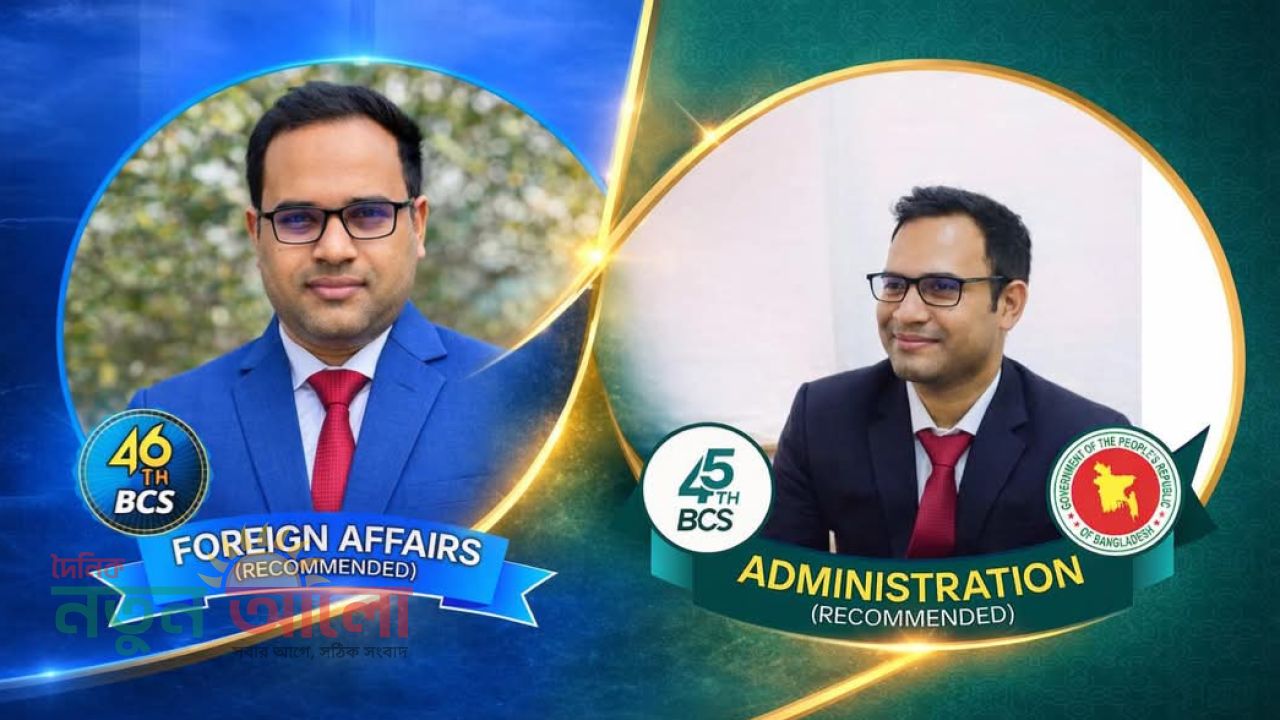
আমার ভাইভা ছিল ৪ জানুয়ারি, ২০২৬। ৪৫তম বিসিএসে প্রশাসন ক্যাডারে সুপারিশপ্রাপ্ত হওয়ায় কিছুটা চাপমুক্ত ছিলাম। বিসিএস ফরেন অ্যাফেয়ার্স আমার প্রথম পছন্দ হওয়ায় আগের বিসিএসগুলোর জন্য দীর্ঘদিন ধরে ভাইভার জন্য প্রিপারেশন নিয়েছি। তাই সবমিলিয়ে আত্মবিশ্বাসী ছিলাম।
আমার ভাইভার সময়কাল ছিল প্রায় ২০ মিনিট। পুরো ভাইভা ইংরেজিতে হয়েছিল। নিম্নে ভাইভা অভিজ্ঞতা শেয়ার করছি—
বেল বাজতেই দরজা খুলে “May I come in, Sir?” বলে অনুমতি নিয়ে ভিতরে প্রবেশ করলাম এবং বিজ্ঞ স্যারদের সঙ্গে সালাম বিনিময় করলাম।
বসার অনুমতি পাওয়ার পরে কোটের বোতাম খুলে সাবধানে, আত্মবিশ্বাসের সঙ্গে বসলাম।
Chairman Sir:
You are Mr. S.M. Nasir Uddin. Graduated from JnU in Pharmacy. Now working as a Senior Officer at Bangladesh Krishi Bank.
Myself: Yes, Sir. Then he referred the question to the 1st External.
1st External: Oh, I see you are also recommended in the 45th BCS Administration Cadre. Congratulations.
Myself: Thank you, Sir.(With a smiling face )
1st External: What is your first choice?
Myself: Sir, BCS Foreign Affairs.
1st External: Why is BCS Foreign Affairs your first choice?
Myself: I emphasized my interest in geopolitics, my long-cherished desire to represent my country on the world stage, promoting Bangladesh’s history and culture and building bridges between our culture and the global community, connecting with the Bangladeshi diaspora, and being part of the challenges Bangladesh will face after graduating from LDC status and beyond.
1st External: What extra effort have you given to be selected as a BCS Foreign Affairs Cadre?
Myself: Sir, as I mentioned before, I have a keen interest in geopolitics. That’s why I have been preparing myself for a long time to understand international politics and relations between nations. I am glad to inform you that I habitually read think tank websites and listen to podcasts regarding developing stories and in-depth analyses of contemporary global issues.
1st External: Mention some think tank websites you follow.
Myself: I follow Project Syndicate, Atlantic Council, Council on Foreign Relations, Russian International Affairs Council, Carnegie Endowment for International Peace, etc.
1st External: Think that you are a representative of Bangladesh to the WTO summit. How will you represent Bangladesh, and which topics will you highlight?
Myself: Sir, as a representative of Bangladesh to the WTO, I would highlight our strong economic growth, export competitiveness—especially in the RMG sector—and our commitment to fair, inclusive, and sustainable trade. I would emphasize the need for special support for LDC graduation, climate-vulnerable economies, and improved market access, while advocating for rules-based multilateralism and digital trade opportunities.
1st External: For any negotiation, how will you manage?
Myself: Sir, in this regard, I would always try to ensure my country’s interest first. If compromise is needed, I will make sure an equivalent benefit is achieved from my counterpart.
1st External: What is the Vienna Convention?
Myself: Sir, the Vienna Convention is a set of norms regarding diplomatic relations between countries.
1st External: In which year was it adopted?
Myself: Sir, in 1861.
1st External: No.
Myself: Sorry, Sir.In 1961.
1st External: Yes. Now tell me what are the benefits diplomats get according to the Vienna Convention?
Myself: I mentioned benefits like first-class citizen privileges in the receiving country, exemption from municipal taxes, security of residence, freedom of movement and communication, diplomatic immunity, etc.
1st External: In which case would a diplomat not get diplomatic immunity?
Myself: Sir, in incidents like espionage, a diplomat may be expelled. Although, according to the Vienna Convention, diplomatic immunity is not waived, the diplomat is banned from the host country.
Then the Chairman Sir started asking questions.
Chairman Sir: In which year did the First World War end?
Myself: Sir, in 1918.
Chairman Sir: What are the treaties signed to end the First World War?
Myself: I only mentioned the Treaty of Versailles with Germany.
Chairman Sir: Why did Russia leave the war, and with which treaty?
Myself: I couldn’t answer and apologized. (I couldn’t mention the internal revolution and the Treaty of Brest-Litovsk with Germany.)
Chairman Sir: When China–Taiwan tensions rise, why does Japan engage more with the USA?
Myself: Sir, there are some strategic reasons:
1.Security Issues: Japan engages closely with the USA’s Indo-Pacific strategy. It is also a member of QUAD. Any potential security threats in this region concern both countries, whose aim is to maintain peace and stability in the Indo-Pacific.
2.Trade-Related Aspects: The Taiwan Strait is a crucial sea route for trade and energy supply for Japan.
3.Balance of Power: Japan’s closer relations with the USA counterbalance China’s growing military and regional influence.
External 2: What is a floating rate?
Myself: A floating rate is an interest rate that changes over time based on a reference rate, instead of staying fixed.
External 2: What is the national budget of Bangladesh?
Myself: The national budget of Bangladesh for FY 2025–26 is approximately Tk 7.90 lakh crore.
External 2: Surplus or deficit budgets: which one is better for Bangladesh, and why?
Myself: For a developing economy like Bangladesh, a deficit budget is better because it stimulates the economy, creates jobs, and increases investment. Moreover, it allows funding for urgent social and infrastructure projects.
Chairman Sir: What are Bangladesh’s diplomatic successes and failures after the 1971 War of Independence?
Myself: I highlighted the following points:
Successes:
1.International recognition as a sovereign state by most UN member states.
2.Became a member of the United Nations (1974)
3.Strengthened ties with friendly countries for economic and security support.
4.Advocated successfully for repatriation of prisoners of war and war crimes accountability.
5.Joined the Commonwealth, NAM, SAARC, and other regional organizations, boosting international legitimacy.
Failures:
1.Difficulty in balancing relations between superpowers during the Cold War.
2.Delayed recognition by some major countries (e.g., USA, Saudi Arabia, China initially).
Chairman Sir: Ok, Mr. Nasir. Your viva is over. We wish you all the best. Please collect your papers.
Myself: Thank you, Sir. As-salamu Alaikum.
After collecting the papers, I conveyed my salam to the external examiners as well and left the board with a smile.
Note:
This is a brief recollection of my viva experience shared for the academic interest of future candidates. The questions and answers may not be reproduced verbatim as they are based on memory.
S. M. Nasir Uddin
Recommended for BCS Foreign Affairs (46th)
বৃহস্পতিবার, ১৫ অক্টোবর ২০২৬
প্রকাশের তারিখ : ১৮ এপ্রিল ২০২৬
আমার ভাইভা ছিল ৪ জানুয়ারি, ২০২৬। ৪৫তম বিসিএসে প্রশাসন ক্যাডারে সুপারিশপ্রাপ্ত হওয়ায় কিছুটা চাপমুক্ত ছিলাম। বিসিএস ফরেন অ্যাফেয়ার্স আমার প্রথম পছন্দ হওয়ায় আগের বিসিএসগুলোর জন্য দীর্ঘদিন ধরে ভাইভার জন্য প্রিপারেশন নিয়েছি। তাই সবমিলিয়ে আত্মবিশ্বাসী ছিলাম।
আমার ভাইভার সময়কাল ছিল প্রায় ২০ মিনিট। পুরো ভাইভা ইংরেজিতে হয়েছিল। নিম্নে ভাইভা অভিজ্ঞতা শেয়ার করছি—
বেল বাজতেই দরজা খুলে “May I come in, Sir?” বলে অনুমতি নিয়ে ভিতরে প্রবেশ করলাম এবং বিজ্ঞ স্যারদের সঙ্গে সালাম বিনিময় করলাম।
বসার অনুমতি পাওয়ার পরে কোটের বোতাম খুলে সাবধানে, আত্মবিশ্বাসের সঙ্গে বসলাম।
Chairman Sir:
You are Mr. S.M. Nasir Uddin. Graduated from JnU in Pharmacy. Now working as a Senior Officer at Bangladesh Krishi Bank.
Myself: Yes, Sir. Then he referred the question to the 1st External.
1st External: Oh, I see you are also recommended in the 45th BCS Administration Cadre. Congratulations.
Myself: Thank you, Sir.(With a smiling face )
1st External: What is your first choice?
Myself: Sir, BCS Foreign Affairs.
1st External: Why is BCS Foreign Affairs your first choice?
Myself: I emphasized my interest in geopolitics, my long-cherished desire to represent my country on the world stage, promoting Bangladesh’s history and culture and building bridges between our culture and the global community, connecting with the Bangladeshi diaspora, and being part of the challenges Bangladesh will face after graduating from LDC status and beyond.
1st External: What extra effort have you given to be selected as a BCS Foreign Affairs Cadre?
Myself: Sir, as I mentioned before, I have a keen interest in geopolitics. That’s why I have been preparing myself for a long time to understand international politics and relations between nations. I am glad to inform you that I habitually read think tank websites and listen to podcasts regarding developing stories and in-depth analyses of contemporary global issues.
1st External: Mention some think tank websites you follow.
Myself: I follow Project Syndicate, Atlantic Council, Council on Foreign Relations, Russian International Affairs Council, Carnegie Endowment for International Peace, etc.
1st External: Think that you are a representative of Bangladesh to the WTO summit. How will you represent Bangladesh, and which topics will you highlight?
Myself: Sir, as a representative of Bangladesh to the WTO, I would highlight our strong economic growth, export competitiveness—especially in the RMG sector—and our commitment to fair, inclusive, and sustainable trade. I would emphasize the need for special support for LDC graduation, climate-vulnerable economies, and improved market access, while advocating for rules-based multilateralism and digital trade opportunities.
1st External: For any negotiation, how will you manage?
Myself: Sir, in this regard, I would always try to ensure my country’s interest first. If compromise is needed, I will make sure an equivalent benefit is achieved from my counterpart.
1st External: What is the Vienna Convention?
Myself: Sir, the Vienna Convention is a set of norms regarding diplomatic relations between countries.
1st External: In which year was it adopted?
Myself: Sir, in 1861.
1st External: No.
Myself: Sorry, Sir.In 1961.
1st External: Yes. Now tell me what are the benefits diplomats get according to the Vienna Convention?
Myself: I mentioned benefits like first-class citizen privileges in the receiving country, exemption from municipal taxes, security of residence, freedom of movement and communication, diplomatic immunity, etc.
1st External: In which case would a diplomat not get diplomatic immunity?
Myself: Sir, in incidents like espionage, a diplomat may be expelled. Although, according to the Vienna Convention, diplomatic immunity is not waived, the diplomat is banned from the host country.
Then the Chairman Sir started asking questions.
Chairman Sir: In which year did the First World War end?
Myself: Sir, in 1918.
Chairman Sir: What are the treaties signed to end the First World War?
Myself: I only mentioned the Treaty of Versailles with Germany.
Chairman Sir: Why did Russia leave the war, and with which treaty?
Myself: I couldn’t answer and apologized. (I couldn’t mention the internal revolution and the Treaty of Brest-Litovsk with Germany.)
Chairman Sir: When China–Taiwan tensions rise, why does Japan engage more with the USA?
Myself: Sir, there are some strategic reasons:
1.Security Issues: Japan engages closely with the USA’s Indo-Pacific strategy. It is also a member of QUAD. Any potential security threats in this region concern both countries, whose aim is to maintain peace and stability in the Indo-Pacific.
2.Trade-Related Aspects: The Taiwan Strait is a crucial sea route for trade and energy supply for Japan.
3.Balance of Power: Japan’s closer relations with the USA counterbalance China’s growing military and regional influence.
External 2: What is a floating rate?
Myself: A floating rate is an interest rate that changes over time based on a reference rate, instead of staying fixed.
External 2: What is the national budget of Bangladesh?
Myself: The national budget of Bangladesh for FY 2025–26 is approximately Tk 7.90 lakh crore.
External 2: Surplus or deficit budgets: which one is better for Bangladesh, and why?
Myself: For a developing economy like Bangladesh, a deficit budget is better because it stimulates the economy, creates jobs, and increases investment. Moreover, it allows funding for urgent social and infrastructure projects.
Chairman Sir: What are Bangladesh’s diplomatic successes and failures after the 1971 War of Independence?
Myself: I highlighted the following points:
Successes:
1.International recognition as a sovereign state by most UN member states.
2.Became a member of the United Nations (1974)
3.Strengthened ties with friendly countries for economic and security support.
4.Advocated successfully for repatriation of prisoners of war and war crimes accountability.
5.Joined the Commonwealth, NAM, SAARC, and other regional organizations, boosting international legitimacy.
Failures:
1.Difficulty in balancing relations between superpowers during the Cold War.
2.Delayed recognition by some major countries (e.g., USA, Saudi Arabia, China initially).
Chairman Sir: Ok, Mr. Nasir. Your viva is over. We wish you all the best. Please collect your papers.
Myself: Thank you, Sir. As-salamu Alaikum.
After collecting the papers, I conveyed my salam to the external examiners as well and left the board with a smile.
Note:
This is a brief recollection of my viva experience shared for the academic interest of future candidates. The questions and answers may not be reproduced verbatim as they are based on memory.
S. M. Nasir Uddin
Recommended for BCS Foreign Affairs (46th)
আপনার মতামত লিখুন